





Monday 2nd Feb marks the start of Oxford Living Wage Week, celebrating the benefits of a living wage for both employers and staff, and highlighting the employers across Oxford that have already adopted the scheme. We caught up with the Oxford Living Wage Campaign to discuss what their banner can mean for local business.
Daily Information: Can you give us a little background on the origins of the Oxford Living Wage campaign?
Oxford Living Wage Campaign: The Oxford Living Wage was launched in 2017-18 by Oxford City Council, inspired by the Living Wage Foundation’s national campaign to secure a wage people can genuinely live on, rather than the legal minimum. It’s a higher minimum wage employers can choose to adopt to reflect the high cost of living and working in one of the most unaffordable cities in the UK.
It’s set at 95% of the London Living Wage, calculated by the Living Wage Foundation and Resolution Foundation on the real cost of living. For 2025–26, the Oxford Living Wage is £14.06 per hour (to be adopted by 6 April), compared to the National Living Wage of £12.71.
DI: The campaign has already been adopted by several local employers; what have their responses been to adopting the OLW?
OLWC: The response has been hugely positive. Over 180 Oxford employers have adopted the Oxford Living Wage since its inception, collectively employing more than 30,000 people. This includes several of the Oxford colleges, the Oxford Bus Company, Oxford Direct Services (ODS), Velocity Cycle Couriers and many local charities and community organisations including Arts at the Old Fire Station, Home Start Oxford, The Porch and Sobell House Hospice Charity.
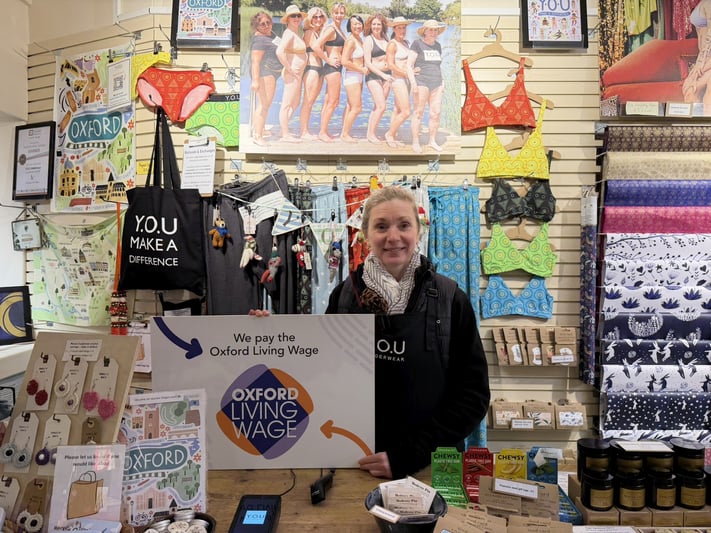
Accredited employers report benefits such as improved staff retention, better performance, fewer absences, and reduced recruitment costs. Aldens of Oxford, a local butcher, reports an average length of service of more than four years.
Many employers say they choose to pay the Oxford Living Wage because it’s the right thing to do: it puts people first and makes good business sense. In a competitive market for skilled, local staff, paying the Oxford Living Wage helps attract and retain great people.
DI: What forms of outreach does the OLW campaign use? How can everyday workers get involved to advocate for a fairer wage?
OLWC: We run targeted campaigns throughout the year, focusing on key sectors and major employers. We also encourage accredited employers to consider displaying the Oxford Living Wage logo publicly and highlight their accredited status on recruitment webpages to show prospective employees that they value fair pay.
Employees can start by having a conversation with their manager or HR team. Explain why working for an organisation that pays the Oxford Living Wage matters to you and how it demonstrates fairness and respect. You can also direct them to our webpages to review accreditation criteria and free application form.
DI: What are some of the potential benefits of increasing to a higher minimum wage for both employees and employers?
OLWC: For employees:
- - Greater financial security and reduced stress
- - Improved health, wellbeing, and quality of life
- - Higher job satisfaction and loyalty
- - Makes it easier to live in the city, closer to their jobs and other amenities
- - Lower turnover and recruitment costs
- - Better productivity and morale
- - Stronger reputation and competitive edge
- - Supports ESG and CSR commitments
For employers:
DI: What would the impact be on the local economy?
OLWC: Paying the Oxford Living Wage has a ripple effect across the local economy. In the coming financial year, we know that a person working full-time being paid the Oxford Living Wage rather than the National Living Wage will earn £2,632.50 more over the course of the year. When workers earn a wage that reflects the real cost of living, they have more disposable income to spend in shops, cafés and services. This increased spending supports local businesses and helps keep money circulating locally.
By tackling low pay, the Oxford Living Wage helps address in-work poverty, support the ability to build savings, and reduce reliance on benefits, which can ease pressure on public services. Ultimately, fair wages contribute to a healthier, more inclusive economy where businesses thrive and residents can afford to live well and work locally.
DI: The campaign will be hosting Oxford Living Wage Week from the 2nd - 9th February to raise awareness of the scheme; what should we look out for over the course of the week?
OLWC: During Oxford Living Wage Week, Oxford City Council will be highlighting some of the fantastic organisations who have already made the commitment to fair pay – you can expect videos, case studies and splashes across the city. We’re aiming to use this week to engage more potential employers to consider accrediting in the coming months.
We’re also launching window stickers, so employers can proudly display their accreditation. We hope this will improve recognition with residents and encourage local people, students and visitors to shop, visit or eat and drink with Oxford Living Wage employers.
If you’re an employer interested in accreditation, please visit Oxford City Council’s website or email the Economic Development team at economicdevelopment@oxford.gov.uk.
Oxford Living Wage Week runs from 2nd - 9th Feb; to find out more about the campaign, visit their website.