





Beatrice Blackwood isn’t necessarily a name you will know, despite her “legendary” status which has even accorded her a blue plaque in Oxford. This isn’t surprising, though, because, although having powerhoused the Pitt Rivers Museum as an intrepid anthropologist and field collector from the 1930s to her retirement in 1959, she mostly worked unassumingly in the background.
Through decades of exploration, teaching, and meticulous cataloguing, she helped shape the Pitt Rivers’ collections and legacy, leaving an influence so enduring that colleagues remembered her as the Museum’s "database" long before computers existed. She also did the original “public engagement”, which leads us to the present series of lectures in her name, organised to celebrate the achievements of women and raise funds for the Museum.
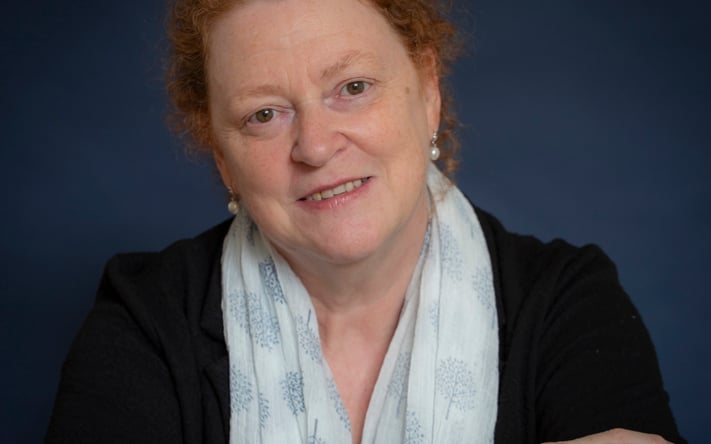
The 2026 lecture was given by Professor Lady Sue Black, President of St John's College and internationally acclaimed forensic anthropologist, who spoke about her career and newly published book An Expert Witness: Forensic Science on Trial.
“Dampen your enthusiasm!” she cried, to a packed auditorium. Being a forensic expert is emphatically not what you see on Silent Witness, NCIS, or Bones. And from there we were taken on an unsexy journey through the world of forensic anatomy—high stakes and mundane in equal measure—to Kosovo, Iraq, Thailand, Grenada and beyond, and through the science and art of piecing together identities from the remains of the permanently silenced.
War crimes. Crossfire casualties. Tsunamis. Missing politicians. In telling these professional stories, Professor Black bound harrowing facts with humour and personal anecdotes, sensitively guiding the audience to an emotional sweet spot. Underlying it all was a palpable sense of compassion and fierce commitment to justice and equity. The story that moved me the most was a domestic one, this time not a dead person but a brave, living victim of sexual abuse whose abuser’s acquittal, despite what Black believed to be credible evidence against him, catalysed Black’s research into hand-recognition forensics. The police had initially asked for Black’s help in this case due to her expertise in anatomical variation, whereby the perpetrator could have been identified based on distinct vein patterns in their forearms, and her ongoing research focuses on anatomical variables that may uniquely distinguish individual human hands, much like fingerprints.
Black studied anatomy at Aberdeen University and described entering the dissecting room as “crossing the Rubicon”. As a doctor to the living, I couldn’t agree more. Except in my profession, I fear it has encouraged a fragmented approach that needs us, from time to time, to remember the people behind the parts. Yet, I couldn’t help but see other parallels between her profession and mine: the need for sound evidence, the black humour, the ridiculous work ethic leading sometimes to stress and burnout, and the inevitable intrusion of government politics.
Anthropology and ethnography, with their practices of gathering data and objects from around the globe, often embedded in histories of colonial expansion, are open to criticism. For example, Beatrice Blackwood took hair cuttings from Ojibwe Nation people, for whom hair is sacred, not to be shorn at a whim. The Pitt Rivers has been grappling with its past and is making efforts to decolonise its collection. I hope the field of forensic anthropology is doing the same with its curricula.
In the convivial atmosphere of St John’s College Garden Quad, it was a joy to listen to this brilliant lecture—a testament to all those silent witnesses whose truths society must strive to uncover and uphold.