





There are many reviews which have sought to devalue We Own The Night. They pick at errors in costume and music which seem out of place in the late 80s setting, the stylised nature of much of the conflict around which the film pivots and the singular morality which forms its thematic core.
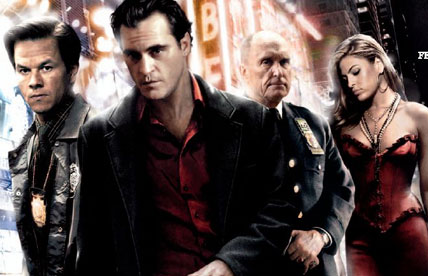
As valid as these criticisms may be in a technical sense, they miss the point of the film as a whole. We Own The Night is a beautifully shot and masterfully acted work. The audience is immersed in the gritty, violent world or the NYPD and the suffocating pressure of the Grusinsky family's lives is powerfully felt. The acting, by Wahlberg and Phoenix in particular, is masterful and the moments when the visual and human elements of the film mesh best, such as the terrifying car chase-shootout or the warehouse drug bust, are a joy to witness.
The message of the film is simple: redemption comes through honesty married with sacrifice. It is not ironic or 'clever'. It is not cool or in vogue. And it is perhaps this deliberate marginalisation of thematic concerns current in Hollywood which has earned the ire of so many critics. As for the all too easy criticisms which have emerged regarding 70s and 80s period inconsistencies, they pale into insignificance when viewed alongside the self-referential attention to detail in the visual cues of the film. Joseph's (Walhberg) final scene, for example, emerging from the smoke-ruined field, the shot divided evenly between the green of the grass and the yellow of the marsh reeds above, evoking the green and gold badges of the Police Department's lapel honors is truly accomplished.
We Own The Night is a serious, heavyweight police drama. It will be increasingly lauded as the vagaries of fashion in today's filmmaking pass and are forgotten.
As valid as these criticisms may be in a technical sense, they miss the point of the film as a whole. We Own The Night is a beautifully shot and masterfully acted work. The audience is immersed in the gritty, violent world or the NYPD and the suffocating pressure of the Grusinsky family's lives is powerfully felt. The acting, by Wahlberg and Phoenix in particular, is masterful and the moments when the visual and human elements of the film mesh best, such as the terrifying car chase-shootout or the warehouse drug bust, are a joy to witness.
The message of the film is simple: redemption comes through honesty married with sacrifice. It is not ironic or 'clever'. It is not cool or in vogue. And it is perhaps this deliberate marginalisation of thematic concerns current in Hollywood which has earned the ire of so many critics. As for the all too easy criticisms which have emerged regarding 70s and 80s period inconsistencies, they pale into insignificance when viewed alongside the self-referential attention to detail in the visual cues of the film. Joseph's (Walhberg) final scene, for example, emerging from the smoke-ruined field, the shot divided evenly between the green of the grass and the yellow of the marsh reeds above, evoking the green and gold badges of the Police Department's lapel honors is truly accomplished.
We Own The Night is a serious, heavyweight police drama. It will be increasingly lauded as the vagaries of fashion in today's filmmaking pass and are forgotten.