They say everyone has a novel in them. There's just one problem... getting it redrafted, edited, perfected and published. In fact getting the damn thing plotted and written would be a good start. But most people have to face down a variety of demons in their writing, often because they suddenly realise they don't know where it's all going.
It's easy to think you have the plot all figured out, but if it isn't there in enough detail to tell you where each scene is going, what the plot sub-layers are, how everything will come together and when, what each character's point of view is, and all the myriad other fiddly bits you'll need to know, then it isn't really a plot yet, just the idea for one. At this point you might need help in knowing how to focus on each area in turn - what questions to use to cross-examine your ideas.
Megan Kerr uses practices from TEFL training, including meticulous planning, pacy lessons and clear objectives. There are several underlying tenets to her teaching: first off, an expectation of rigour, which makes everything simultaneously harder and easier - harder in the short-term but easier in the writing. You can't plot and write well both at the same time, so the key is in the groundwork. Second is the wonderfully basic assumption that writing novels is perfectly normal.
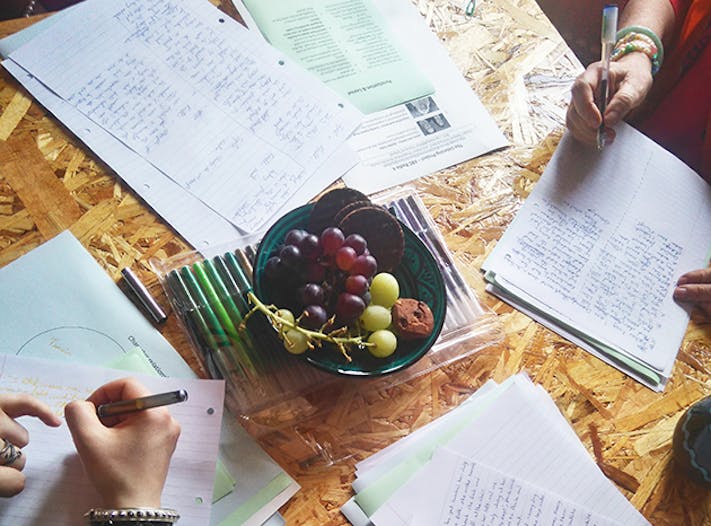
Much of the class-time we work in groups. The results are frequently hilarious, and the combination of collaboration and speed really prevent anyone being precious about writing. Working as a group also means most of the tasks feel like games, even the ones that don't involve dice. Homework assignments are manageably short so you can fit them into your week.
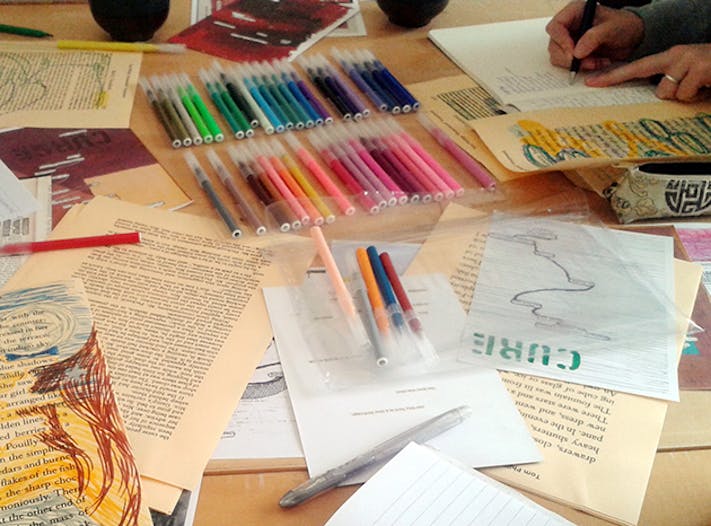
Many activities help you to visualise ideas and thought processes: how to lay out plots, how to check your tension is in the right places, using forms and questions to see where current holes are and how to plug them. And in all this a slight obsession with felt tip pens is seen as an advantage, not a handicap - here are displacement activities which will positively help.
The processes build up, so this week one of our quick tasks was something that took more like an hour a couple of weeks ago. Each week I feel simultaneously pleased that we're getting a stage further, more skills in the arsenal, and sad that it means we're closer to the end. In that respect it's like a very good book.
Of course in class the exercises are idealised, and transferring those ideas to your own half-thought-out novel can be harder. Think army medic, learning First Aid in a nice, clean operating theatre, but actually performing it on a makeshift bed in a sandy cave in the middle of battle.
For the one-day workshops you are expected to have some work in progress [NB This is no longer the case, and the one-day workshops function much more like short versions of the long courses, looking at one particular aspect of writing - Ed. 2017]. For the 12-week Story Elements course you just need a will to write - most of the practice assignments will use the (frequently extraordinary) ideas cooked up in class. If you have other things you're dying to work on all to the good, but it's not vital.
As you can probably tell, I would really, really recommend Megan's novel-writing tuition. I've always loved frenetic games of Balderdash and Consequences, and the zany haste of the Improvised Musical on Radio4, and so I find Megan's games and the group-orientated nature of the classes great fun. To be doing that sort of thing and learning too, feeling your own writing steadily coming under your control, that is heady stuff.